Every file that comes through this practice is read by a person, line by line, the way a committee reads it.
Now reading files for the Fall 2027 cycle
Private mentorship.
Public results.
One company across the whole arc: the LSAT, the application, the first year of law school, and the job at the end of it. A small number of students are taken personally. Everyone else works the same method on their own.

Most recent cohort, Aug–Dec 2024, n = 36 · at least six weeks enrolled, two check-ins a week · medians published with dates and cohort size, never anecdotes
Where are you right now?
Six vendors across seven years, and every handoff drops something.
The Arc
One company from the first
practice test to the offer.
Five stages, one record. Click one and see what it hands the next.
The system behind the practice
Introducing the Lovare OS™
The agentic operating system for future lawyers.
One record · Seven years · Free to law students through their school
Ten of them, and not one asks for an email before it tells you anything.
Free tools
Find out where you stand
before you talk to anyone.
A calculator can tell you your position. It cannot read your file, which is the part we actually sell. So none of this is held back.
Most students assemble six vendors across seven years. This is the alternative.
The practice
Admission is not luck.
It is strategy, executed early.
An engagement begins with the narrative, not the essay. We find the argument your file is actually making, then build every piece around it: the personal statement across as many drafts as it takes, the supplements, the resume, the school list, the scholarship position, the interview, and the negotiation on decision day.
Files go in as early in the cycle as they can be made ready. That single decision moves more admissions and more money than anything else on the list.
The practice is deliberately small. Ali reads every file personally, which is the constraint that makes the rest of it possible.
Two people on every file. Not a matched associate, not a rotating coach.
Led by
The two people who will be on your file.
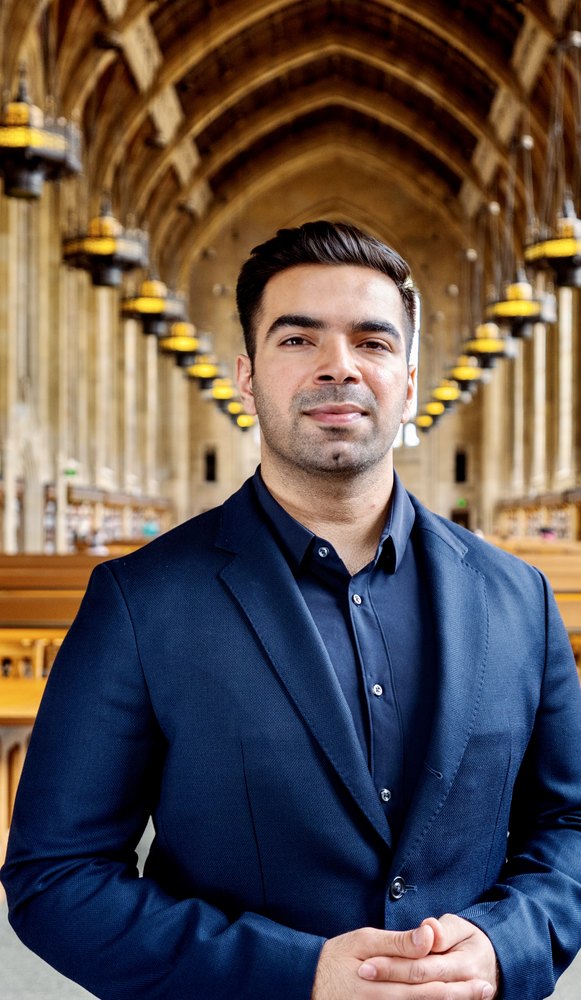
Georgetown Law JD and MSFS. Built the practice from a single tutoring chair in 2022 to more than 700 students, entirely by word of mouth. Reads every file.

Former partner at Husch Blackwell. Advises on what the degree is actually for: the summer, the offer, and the practice group you end up in.
Nobody loses forty points because they forgot the rule. They lose them on the clock.
%20%20-%20.jpeg)
Research
The score is rarely a
knowledge problem.
Students plateau with the material already learned. What moves on test day is what the pressure does to a person: the timing, the second guessing, the question they abandon and think about for the next twenty minutes.
Lovare runs an IRB approved study with Dr. Ian Lyons of Georgetown's Department of Psychology on test anxiety and LSAT performance. It is real research with a real protocol, not a wellness page, and what it produces goes directly into how students are coached and into how the platform is built.
Named, then trained
A student who knows their pattern under pressure can rehearse against it. One who does not simply hopes for a good day.
Built into the work
Timing discipline, review habits, and recovery after a bad section are taught as skills, on the same footing as the logic.
Where it stops
This is performance coaching and academic research. It is not therapy, and we say so plainly to every student who asks.
The method, without the chair.
The platform
We take a small number of clients.
Everyone else can have the system.
The rubrics, the reader profiles, the diagnostic, and the drills that run inside this practice are built into a platform students can work on their own. Same method, same standards, same refusal to tell you something is fine when it is not. It is not the chair, and it is not sold as one.
Paste your opening line.
One read, no accountThe first two sentences of your personal statement are the only ones a reader is guaranteed to finish. Put them here and see what a reader would stop on.
Nothing is stored unless you ask us to. One read per visitor.
Before anything else, we find out what is actually costing you points.
Start with an honest position.
The diagnostic reads how you actually work a section, not just what you scored. It returns the pattern you fall into under time, the areas carrying the most recoverable points, and the order to fix them in.
Changes a correct answer to a wrong one more often than the reverse. Loses time on the return pass, not the first.
It marks the sentence, and then it says why.
I have always been passionate about justice. Ever since I was young, I knew I wanted to help people who could not help themselves. The first eviction notice I translated for my mother was in a language she had signed without reading.
Two sentences, no scene, no cost to you. A reader has seen this opening four hundred times this cycle and cannot tell your file from the next one.
Feedback that names the reason.
Most tools tell a student their essay is strong. This one marks what a reader would stop on, replaces it, and explains what the original cost. The rubrics come from five years of real files, including the cycles that ended in rejection.
Better to hear it in August than in March.
The verdict before the committee gives it.
Your file goes in front of a simulated reader built on those same profiles and comes back with a call and the reasoning behind it. Students find out what a committee would say while there is still time to change it.
Not a reject. Not yet a yes.
A whole semester, no homework, no quizzes, no feedback, and then one exam decides the year.
For law students
Law school tells you nothing
until it is over.
Every 1L takes the same subjects, and every professor tests them differently. So the work is not generic outlines. It is reading the professor you actually have, then practising against how that person marks. Open free to law students through their school.
Your professor, not a generic course.
Upload the syllabus. You get back what this professor emphasises, what recurs on their past exams, what format the exam actually takes, and a dated plan built from your own class calendar. Every claim shows the line it came from.
Where a topic is not clear, it gets explained in plain words with a real analogy, and the legal term stays on screen next to it.
Three hours, open book, two fact patterns. Six past exams read.
Then the part the grades are for.
There is no national recruiting date any more. Every school sets its own, and most students are working from advice that expired in 2018. You get your school's actual window, the firms that genuinely run a first year programme, the applications drafted employer by employer, and the people you have spoken to kept in one place so a letter can name them.
Brian ran that side of a firm from the inside, which is why this exists at all.
This is what the work actually looks like. Everything above is a description of it.
A worked example
One file, from the first read
to the offer.
A strong record making a weak argument.
Numbers inside the band at every school on the list. A statement in its second draft. A school list built from a ranking table and nothing else. An unexplained year between graduation and the first job that the file simply did not mention.
I have always been passionate about justice. Ever since I was young, I knew I wanted to help people who could not help themselves.
Three places a reader stops.
Two sentences, no scene, nothing that costs the writer anything. A reader who has been at this since September cannot tell this file from the one underneath it.
Left unexplained, a reader fills the gap in themselves, and they rarely fill it generously. Explained in four sentences without apology, it stops being a question.
Every target sits where the numbers are ordinary. Nothing on the list is a school where this record is well above median, which is where scholarship money actually comes from.
The argument the file was already making.
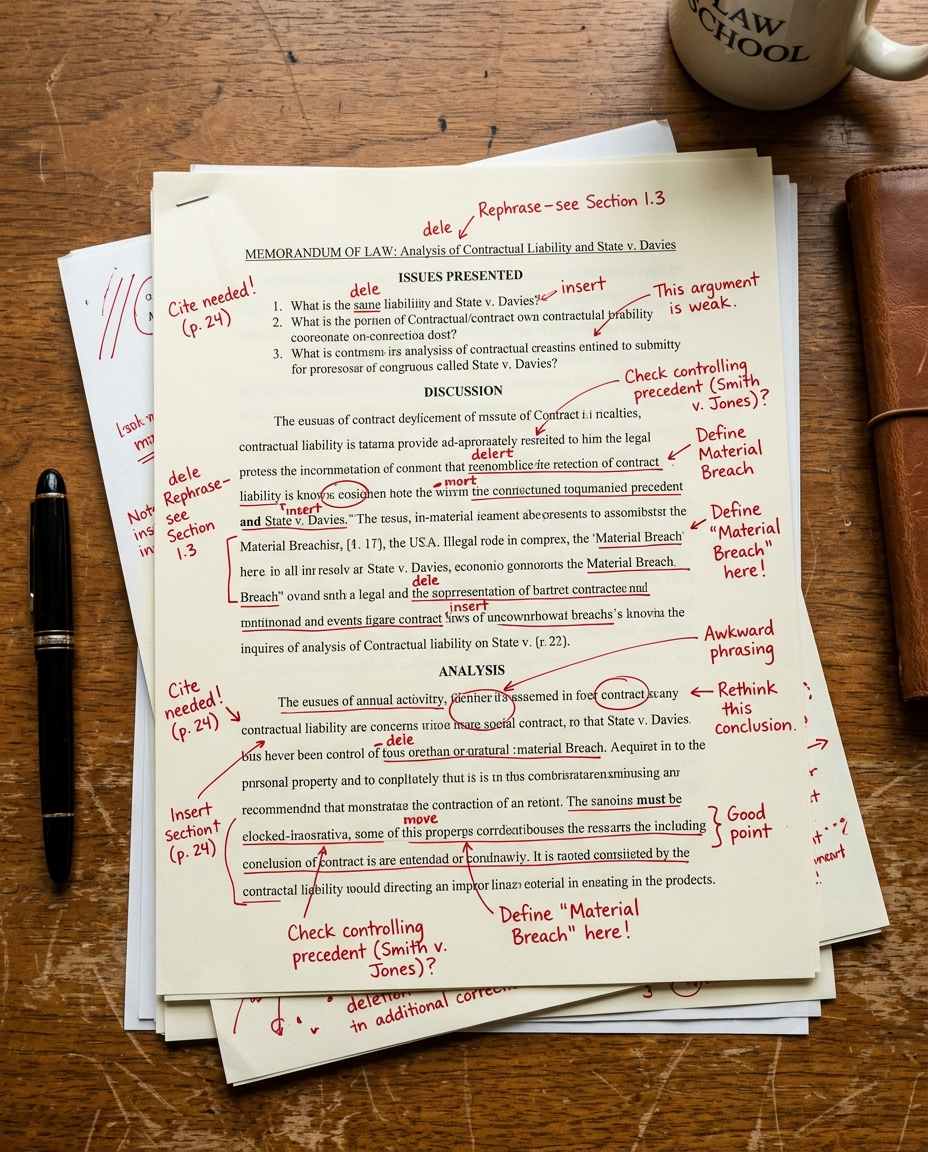
The statement was rebuilt around one afternoon that actually happened, then cut back across four more passes until every paragraph earned its place. The addendum went in plain and short. Four schools came off the list and three went on, chosen because the record sits above their medians rather than inside them.
The first eviction notice I translated for my mother was in a language she had signed without reading.
Submitted in the first two weeks the cycle was open.
Early is not a preference. It is the cheapest advantage in the process and the one most applicants give away.
Illustrative. Replace with a real file and written consent before publishing.
Verified offers, not applications.
Where students land
Yale · Stanford · Harvard · Chicago · Columbia · NYU · Penn · Virginia · Michigan · Berkeley · Duke · Northwestern · Cornell · Georgetown
Our vision
The pipeline decides who becomes a lawyer.
Seven years separate a first practice test from a first offer, and almost nobody walks it with the same person twice. A test prep company, then a consultant, then an outline publisher, then a career office, then a bar course. Five industries, and not one of them knows what the last one learned about you.
That handoff is where the cost sits, and it falls hardest on the students who did not arrive already knowing how any of this works. The ones with a lawyer in the family get told which parts matter. Everybody else pays five times to be told five different things.
What we are building is one record that runs the whole way. What you did on the LSAT should shape what your application claims about you. What your application claimed should still be legible when you are choosing a section, and what you were good at in first year should be what a cover letter names.
The paid thing is still a person reading a file, and it should be. A system can tell you where you stand. It cannot tell you what to do about it, and it will never sit on a call and say the honest thing when the honest thing is to wait a year.
Worked personally
The practice
A small number of students each cycle, taken end to end by Ali and Brian. Begins with a consult and a read on where you actually stand. Limited by how many files one person can read properly.
Request a private consultApplying on your own
The platform
The same diagnostic, rubrics, reader profiles, and drills, available without the chair. For students running their own cycle who still want to be told the truth about the file.
See the platformAlready in law school
Exams and jobs
Read your professor, prepare for the exam they actually set, and get through recruiting with the applications drafted. Open free to law students through their school.
Start with your syllabusAli takes these calls himself.
Request a private consult
Tell us where you are in the cycle.
Thirty minutes, no cost, no pitch deck. You will leave with a read on your position and the two or three moves that matter most from here, whether or not you work with us.
LSAT preparation
Answer it before you read anything else
Four ways to lose a question.
That is the entire list. Everything you have ever got wrong on this test is one of them, and across a section it is usually the same one, forty times. A score report will never tell you which.
Find out which one is yoursOur winter students gained an average of nine points. Our summer students gained fourteen. The summer course is the better course.
The reasoning above is most vulnerable to criticism on which ground?
- The answer
Pick one
Four. Not forty. It has been the same list for as long as the test has existed.
You finished it knowing the subject.
The expensive one. It gets the strongest readers on the page.
Not a reasoning problem at all.
Here they are.
Everything you have ever got wrong is one of these. A score report tells you that you missed eleven. It will not tell you that nine of them were the same mistake.
You read what it was about.
Not what it was doing. The stimulus had a structure and you came away with a topic. After that every choice looks a bit relevant, because relevance is the only test you have left.
You picked something true.
The choice was correct about the world. It was not supported by the eight lines in front of you. Strong readers lose more points here than anywhere else, and what causes it is knowing things.
You stopped at B.
Something fit, so you quit reading properly. The rest was confirmation. On a test built so the second-best answer is attractive, skimming five choices costs more than reading two.
You ran out of question.
Ninety more seconds and you had it. The ninety seconds went to the three questions before it. That is a budget problem, and it gets fixed in a completely different place.
It was never there. That is the whole question.
Now take it out.
Arguments carry weight like anything else. Here is the one from the top of this page, standing up.
Three questions is not a diagnostic. It is enough to see the shape of one.
Three more. Same trick, different clothes.
Every wrong answer below is true, or sounds it. At the end you get told which kind of miss you make, not how many you got.
Logic Games are gone. Plenty of study plans have not noticed.
What you are sitting.
Free, and not a lead magnet. It is the first hour of the actual work.
The diagnostic argues back.
Not how many. Which kind.
You work a set. For every miss, and every lucky hit, it asks what you thought the argument was doing, then shows you what it was doing. What comes back is a ranked list of the errors you make, each one attached to the questions that prove it.
Then it puts you on drills for the top of that list. Usually not the topic you would have picked.
24 questions. Ranked by cost, not count.
Drilling what you are already good at is a comfortable way to lose a summer.
Then you drill the one thing.
One person can only read this closely for so many people.
Or someone reads the misses himself.
A small number of students a cycle. Sessions run off your own worked sets rather than a syllabus, so the second one already knows what the first found. Between sessions the work goes at your top error, and it changes when the error does.
It starts with a call and a straight answer about where you are and what is realistic. That part is free either way.
Research
Some people lose ten points in the room.
Points they never lose in practice. We are running a study with Dr. Ian Lyons in Georgetown's Department of Psychology, under an approved IRB protocol, on test anxiety and LSAT performance. The question is narrow: which interventions get those points back, measured rather than assumed.
Performance under pressure, not therapy. Nothing here is treatment. What comes out goes into how we prepare people for a timed room, and it gets published whichever way it lands.
Thirty minutes. You will leave knowing which of the four is costing you the most.
No charge, and no pitch. If the honest answer is that you should sit the test again in a year, you will hear that instead.
Law school admissions
Watch a file get read
Your application becomes one sentence.
Fourteen hundred words of statement, four years of transcript, two letters and an addendum. All of it is read, compressed, and written down as a single line by a stranger. You will never see it, and it is what gets argued over in the room.
Watch a file get readNumbers
- 163, one take
- 3.71, state school
- Applied in January
Resume
- Four years, insurance claims
- Two promotions
- Night class in evidence
Statement
- Why she left claims
- One case, named
- 1,400 words
Letters
- Supervisor
- Adjunct professor
- Addendum on the January date
Summary
- Written by the reader
- Goes to committee
- She never sees it
That is the application now. Not the 1,400 words. Not the resume. One line, written by somebody else, and it is what gets argued over.
Most applicants have never asked what their sentence would say.
Nobody writes for the order.
Files get written front to back. They get read in a sequence, and the sequence is roughly the same everywhere. Four things follow from that, and none of them are about prose.
Your numbers write the question.
Not the verdict. A 163 from a career changer and a 163 from a senior are two different files with the same score. The rest of yours has to answer the question yours raises, and most people never work out what that question is.
The statement lands late.
By the time anyone opens it, they have a description of you in their head. Your essay either confirms it, complicates it, or floats free of it. The third one is the common failure and it is usually the best-written essays that do it.
Letters only count if they corroborate.
A letter repeating what you already said is a wasted slot. A letter independently confirming the one claim your file rests on is worth more than the other two together. That means briefing your recommenders on the claim, which almost nobody does.
Addenda get read for tone.
Explaining is fine. Excusing reads instantly and costs you. The difference is usually one clause, and you cannot hear it in your own writing.
Fourteen hundred words of statement. Four years of resume. It all comes out the same thickness.
Everything you send gets squeezed into one line.
Not thrown away. Compressed. The whole file leaves the first read as a sentence you never see, and that sentence is what goes into the room.
Every edit says why, so you can argue with one.
The problem is rarely the prose.
Structure, then sentences.
Whether the essay makes one claim or four. Whether it is a claim only you could make. Whether the second half earns the first. Whether it answers the question your numbers already asked.
Line edits arrive with the reason attached. Accept every one and you end up with a competent essay in somebody else's voice, which readers spot and discount.
I have always been passionate about the pursuit of justice and helping those who cannot help themselves the eviction docket in Prince George's County, where I sat for nine months.
Where you apply is a money decision wearing an ambition costume.
The list decides what you pay.
You will never see the real one. This is the closest you get.
Build yours.
Four choices, and the line assembles itself. It will not be the sentence a reader writes about you. It will be the right shape, which is the part almost nobody has looked at.
Your score, against the schools you want
Your transcript
What you did after undergrad
What your statement is about
What this cannot do
It does not change your transcript.
No admissions work adds points to a score or rewrites four years of grades. What it changes is what a reader concludes from the record you already have, and how much of the money on the table you walk away holding.
If your file is not ready, you will hear that in the first conversation, not after you have paid for a cycle that was never going to work.
Find out what your sentence says before a stranger writes it.
Thirty minutes, no charge. You leave with a read on your position and the two or three moves that matter from here.
Law school exams and coursework
Switch sections and watch the plan change
One course. Five different exams.
Five professors teach your subject in the same building in the same semester from the same casebook. What gets tested, in what format, and what earns the marks are set by one person each time. Every commercial course sells all five of them the same book.
Switch sections and watch the plan changeContracts / one building, one semester, five sections
Same casebook throughout
Your fourteen weeks
What to stop doing
A student in C who studied like a student in B loses the exam on format alone, having understood the law perfectly well.
One outline cannot serve five exams.
Every commercial course sells the same book to all five of those students. Four of them are studying for an exam nobody is going to set them.
The doctrine is the easy part.
Consideration is consideration in every section in the country. What changes is which parts get tested, how deep, in what format, and what a good answer looks like to the one person marking it.
Professors repeat themselves.
Across past exams the same issues surface again and again, and the ones that never appear also never appear. That pattern is sitting in documents most students never collect.
Format decides more than knowledge.
Eight hour take home and three hour closed book reward opposite habits. Train the wrong one well and you have made yourself worse at the exam you will actually sit.
You find out in January.
No homework, no quizzes, nothing marked. The first honest feedback on September's work arrives after the grade is already permanent.
Every commercial course sells the same key to all five of them.
One casebook. Five different cuts.
Switch section above and watch the key get re-cut and the lock re-pinned. A key ground for Section B does not open Section C, however well it was made.
Every claim points at the line it came from. If it cannot point, it does not claim.
Upload the syllabus.
What comes back.
A brief on how this professor tests. Format, length, what is allowed in the room, what has recurred across the past exams you can get hold of. A plan dated against your real class calendar rather than a generic fourteen weeks.
Where something is not clear, it gets explained in plain words with an analogy that holds, and the legal term stays on screen beside it, because you will be examined in the legal term.
Six past exams read.
Feedback in October, not January.
Practice that gets marked.
For law schools and student bar associations
Open free to law students through their school.
Lovare reaches law students institutionally. A school or an SBA switches it on, students sign in with their school address, and the exam and coursework side costs the student nothing.
Schools see usage at the level that helps academic support and nothing at the level that would identify a struggling student to their institution. That goes in writing before anything is switched on.
Start with the syllabus you already have.
One upload tells you how your professor has tested before and what that means for the next fourteen weeks.
Legal recruiting and placement
Your firm list, live
Every firm you are chasing, and where each one stands.
One board for the whole search. Move a firm from researching to submitted to offer, keep its deadline next to your own exams, and hold the name of everyone you have spoken to in the same place the next letter gets written from.
| Firm | Status | Deadline | Contact / notes |
|---|
What sits behind each row.
The board is the surface. Underneath, every firm you add is wired to your own record, so the work per employer is drafted rather than guessed.
Where this stands
The board is live. The firm data fills in this fall.
You can build and keep your list now. The verified school windows and firm programmes load in for first year recruiting this fall, starting with the schools whose policies we can actually confirm rather than all of them at once.
Until then the useful thing we can do is tell you what your own school's policy says and when your window opens. That part exists today and it costs nothing.
On the platform
The part that used to mean knowing somebody.
An unwritten calendar quietly helps the students who can call a lawyer in the family, and costs everyone else. The platform hands every student the same advantage: people who have already sat exactly where you are sitting.
The bar
We have not built a bar course
February 2028 is the last legacy bar exam.
Anywhere. After that there is one exam, it tests seven lawyering skills rather than a subject list, and it is not the one your mentors sat. Some of you already have no choice about which one you take.
Find out which exam you will sitFebruary 2028 is the final legacy sitting anywhere.
Fewer subjects does not mean less work. It means the work moved.
The memorising shrank. The doing grew.
The old exam rewarded holding an enormous amount of doctrine in your head for eight weeks. The new one narrows the list, then asks you to use what is in front of you.
Seven skills, not a subject list.
Legal research, legal writing, issue spotting and analysis, investigation and evaluation, client counselling and advising, negotiation and dispute resolution, and client relationship and management.
Four subjects came off.
Conflict of Laws, Family Law, Trusts and Estates, and Secured Transactions are no longer required as foundational knowledge. Family Law returns from July 2028. Material can still turn up inside performance tasks.
The advantage moved earlier.
These are skills built across three years, not eight weeks in a summer. What you do in first year now matters more to bar passage than it used to.
Nobody knows much yet.
One administration has happened. The second wave has not sat. Passing scores in several jurisdictions are still unset. Anyone selling certainty about this exam right now does not have it.
Two exams run alongside each other until February 2028. After that there is one.
Everybody moves across by 2028.
Not at once, and not on the same date. Step through it and watch the legacy exam empty out.
Two questions decide which exam you sit. Most students have never been asked either one.
Which exam will you actually sit?
Your jurisdiction and the year you finish. That is all it takes, and for some of you there is a real choice in there worth thinking about now rather than in third year.
Why there is nothing to buy here
Two sittings of real data do not exist yet.
Building a bar course today would mean guessing at what the exam rewards, publishing the guess confidently, and charging for it during the highest stakes eight weeks of somebody's professional life.
We would rather build the three years in front of it properly, watch what the exam actually does, and turn up with something that works. When there is a date, this page will carry the date instead of a promise.
The three years before it are the part we can help with.
Bar readiness gets built in first year, in how you learn to read a problem and write an answer somebody can act on. That part exists now.
Free tools
Nothing here asks for an email first
Built because the honest version of each of these did not exist anywhere else.
Ten tools. All of them free.
Some of these take thirty seconds and some take half an hour. None of them are a trial, a teaser, or a lead magnet with the answer withheld. Where a number is directional we say so on the tool itself.
Work a set and get back the reasoning errors you actually repeat, ranked by what they cost rather than by count. The blind-review delta shows the gap between what you know and what you do on a clock.
Seven archetypes. Which kind of test taker you are decides which failure mode is yours, and most study plans are written for somebody else's.
Raw score to scaled score to percentile, so a practice test result means something before you compare it to a school's median.
Every administration, the registration deadlines, and when scores release, against the cycle you are applying in.
Per-school probability against your LSAT and GPA, built on ABA 509 disclosure data, with a verdict rather than just a number. Directional, and not affiliated with LSAC.
Six steps from profile to prediction. Builds three structurally different angles for your statement, tied to what your target school actually runs, and tells you which one your file can carry.
Where your score puts you for merit aid at each school, with a negotiation guide and a reconsideration email you can actually send.
Every T-14 school with its 2025 ABA 509 medians, so you are building a list against real numbers instead of a magazine order.
Admission rates by school, from the disclosures, without the round numbers everyone quotes at each other.
Seventeen schools, one strategic playbook each. Score bands, anonymised admit and deny profiles, the cycle timeline, and a probability calculator built for that school alone.
There is no free tool for these three stages, and we would rather say that than pad the list. The exam and recruiting work lives inside the platform, which law students reach free through their own school, and there is no bar product at all yet.
Why these are free
Because the paid thing is a person.
A calculator can tell you where you stand. It cannot tell you what to do about it, and it cannot read your file. What we sell is somebody reading the file, which is why nothing above needs to be held back.
If a tool tells you something worrying, that is worth thirty minutes on a call whether or not you ever work with us.
Start with the one that matches where you are.
Studying, use the diagnostic. Applying, use the calculator and then the strategist. Already in law school, your school can switch the platform on for free.
About
What we actually do
If this sentence stops being true, this page is the first thing that changes.
In one paragraph
Lovare is a boutique practice for the whole law school path, and the system built out of it: the LSAT, the application, first-year exams, recruiting, and the bar. A small number of students are taken personally, from the first practice test to the last. Everyone else can work the same method on their own, and law students reach it free through their school. One company across all seven years, which is the part nobody else does.
Who it is for
People applying to law school, people already in it, and the parents paying for one of those. Not firms, not schools as customers, not anybody who has already qualified.
What you buy
A person reading your file. The tools are free and the platform is inexpensive because the thing worth charging for is somebody who has read four hundred of these telling you the truth about yours.
What we will not do
We advise and edit. We do not ghostwrite. Results are published as medians with dates and cohort size, never as anecdotes, and never with a name attached without written consent.
Six vendors across seven years, and every handoff drops something.
Why it exists.
The path to a legal career runs through five separate industries that do not speak to each other: test prep, admissions consulting, outline publishing, career services, bar review. A student assembles six vendors across seven years and every handoff loses something.
That cost falls hardest on people who did not arrive already knowing how any of it works. The ones with a lawyer in the family get told which parts matter. Everybody else pays five times to be told five different things, and finds out what mattered afterwards.
Every engagement is carried by one of these two. Never delegated.
Senior leadership
Two people, and the cohort is small on purpose.
Ali Unar
Founder and principal
Founder of Lovare and architect of its diagnostic method. Built the blind-review system the practice runs on, and reads every file that comes through it personally.
- Georgetown Law JD and MSFS
- UCLA Political Science and Economics
- President Foundation for American Security and Technology
Brian H. Potts
Co-founder and head of career strategy
Author of two books on legal hiring and career strategy, and founder of Legal Mentor Network. Brian leads the placement side: firm fit, callback preparation, and introductions across Big Law. He ran that side of a firm from the inside, which is the only reason we are building it.
- UC Berkeley Law JD
- Author Two books on legal hiring
- Founder Legal Mentor Network
Some people lose ten points in the room that they never lose in practice.
We run actual research.
Lovare is running a study with Dr. Ian Lyons in the Department of Psychology at Georgetown University, under an approved IRB protocol, on test anxiety and LSAT performance. The question is narrow and practical: which interventions actually recover points under pressure, measured rather than assumed.
Performance under pressure, not therapy, and nothing there is treatment. What comes out of it goes into how students are prepared for a timed room, and it gets published whichever way it lands.
How we work
Quiet by design.
No public client lists and no posts about wins. Drafts and notes stay in a private workspace, NDAs are available on request, and results go out as medians with dates and cohort size rather than as names.
One point of contact for everything, daytime replies within a day, and a calm week before a test or an interview where things get removed rather than added.
Thirty minutes, and an honest read.
You will leave knowing where you actually stand and the two or three moves that matter from here, whether or not you work with us. If the honest answer is to wait a year, you will hear that too.